Correction of a Maxillary Canine–Lateral Incisor Transposition in a Patient with Severe Root Resorption of the Central Incisors
Article Sidebar
Main Article Content
Abstract
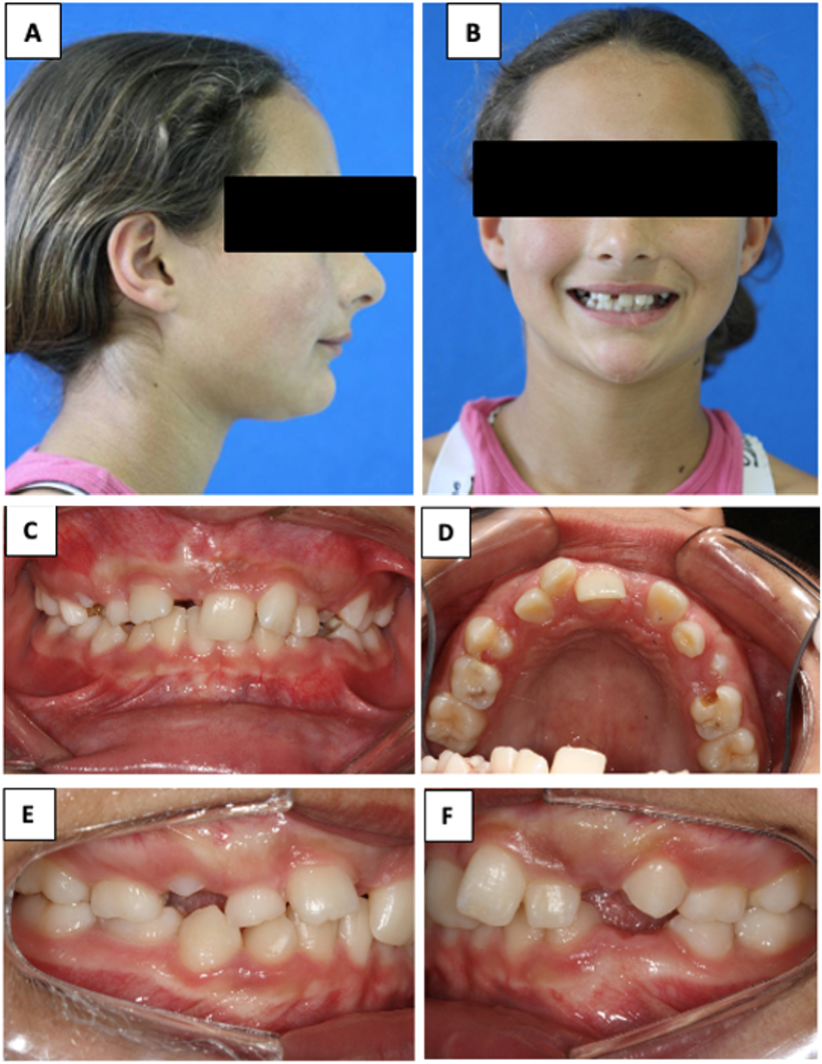
Maxillary canine–lateral incisor transposition is an uncommon eruption anomaly and represents a significant orthodontic challenge, particularly when associated with severe root resorption of adjacent incisors. This case report describes the successful correction of a buccally displaced maxillary canine–lateral incisor transposition in a growing patient presenting with extensive pre-existing root resorption of both maxillary central incisors. A 10-year-old female presented with severe anterior crowding, delayed eruption of the maxillary right central incisor, Class II malocclusion, and transposition of the maxillary right canine over the lateral incisor. Considering the high risk of further root damage, treatment was performed using segmented bioprogressive mechanics with statically determinate force systems, beta-titanium (TMA) cantilevers, and a transpalatal arch with cantilever extension to produce controlled and light orthodontic forces. The canine was first moved distally to avoid root interference and subsequently translated lingually into its anatomical position. After 30 months of active treatment, a functional Class I occlusion, proper canine alignment, satisfactory facial esthetics, and improvement of the skeletal relationship were achieved. Radiographic evaluation demonstrated adequate root parallelism and, importantly, no progression of the pre-existing root resorption during treatment or at the two-year follow-up. This case demonstrates that complete correction of maxillary canine–lateral incisor transposition is feasible even in the presence of severe incisor root resorption when carefully planned segmented biomechanics and light, controlled force systems are employed.